Entering the Orthodox Church · Lesson 4 of 20
What Does the Name “Christian” Mean?
All who are baptized become members of the Church and are called disciples of Christ — Christians. We add the word Orthodox, meaning “right belief,” because there are Christians with mistaken views about God, man, and salvation; the name marks the true faith held from the beginning. But the heart of the name is simpler: Christians are those who follow Christ — who obey His will and His commandments, and who are united with Him through the sacraments, above all the Divine Eucharist.
The name Christ itself means “the Anointed One” — the Messiah of the Old Testament. It tells us who He is: the human nature assumed by the Second Person of the Holy Trinity was anointed by His divinity. Christ is therefore both God and man — the God-Man, Theanthropos. God became man to save man, without ceasing to be God.
Did the World Expect Him?
The Christian proclamation addresses the human longing for deliverance from sin and death. Saint Paul begins his preaching in Athens with the altar “to the unknown God” (Acts 17:23), directing his hearers to the God who made the world. Within Israel, the prophets prepared the way for Christ; the Church reads their testimony in the light of His Incarnation, Passion, and Resurrection.
The One whom all peoples dimly expected is Christ. In His person God and man are united; His conception and birth of the Holy Spirit and the Virgin Mary are miraculous; and He is clearly superior to the founders of every religion — for they were men, while He is the God-Man. He spoke of love and purity of heart; He overcame sin, the devil, and death; He rose from the dead. No other founder of a religion has risen from the dead. This is why there is no other savior.
Where Do We Meet Him?
First in the Holy Scriptures — especially the four Gospels, written by His disciples, which show us three things: what Christ said (His teaching and parables), what Christ did (His miracles, worked out of compassion and to seal His teaching — He opened the eyes of the man born blind to reveal that He is the Light of the world), and what Christ suffered for us (His Passion, crowned by His Resurrection, in which He raised the whole human nature that had died upon the Cross).
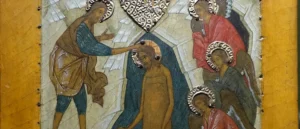
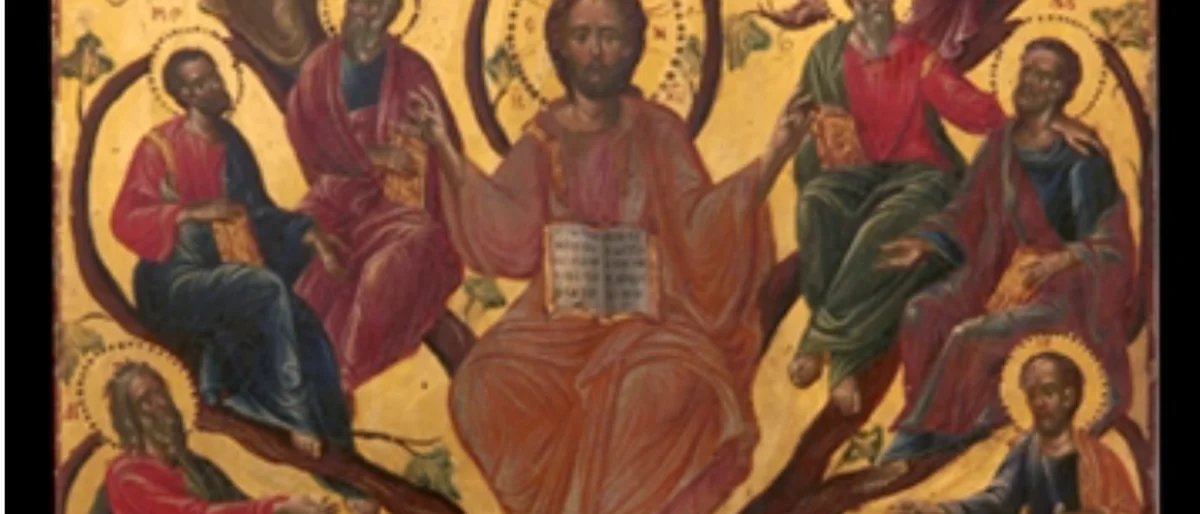
But we do not merely read about Christ — we experience Him in the Church. In Baptism we die to the world and are buried with Him, shown by the triple immersion in the font; in Holy Communion we receive His Body and Blood; and by grace we ascend together with Him. A Christian is not an admirer of Christ but a member of Him. Saint John Chrysostom loved to list the names the Gospel gives Him: the Way, because through Him we go up to the Father; the Root, because in Him we flourish; the Shepherd, because He feeds us; the Lamb, because He was sacrificed for us; Life, Light, our garment, our banquet, our dwelling — every name showing that our relationship with Him is organic and real, not abstract.
Why Begin the Catechism with the Prodigal Son?
Among the parables of Christ, one stands out as a map of the whole Christian life: the Parable of the Prodigal Son [Luke 15:11–32]. A younger son demands his inheritance and leaves for a far country; he wastes everything, and ends up feeding pigs in his hunger. Coming to himself, he remembers his father’s house and resolves to return — not as a son, but as a hired servant. But while he is still far off, his father sees him, runs to him, embraces him and kisses him; he clothes him in the best robe, puts a ring on his hand and shoes on his feet, and orders the feast to begin. The elder brother, hearing the celebration, grows angry and will not come in — and the father goes out to plead with him too.
Hidden in this one story, Metropolitan Hierotheos writes, is the whole reason Christ became man: what the fall of man is, what the work of the Church is, and how a person is saved. The far country, the hunger, the coming to oneself, the return, the father who runs, the robe and the ring and the feast — each detail will unfold, in the catechism lessons that follow, into the great themes of the faith: who God is, what happened to man, what the Church does, and what the feast is to which every one of us is invited.
What we should carry from this first lesson is the rock on which everything else is built: Christ is both God and man, and for this reason He is the true Savior of men. To be a Christian is to be joined to Him — nourished by His Body and Blood, and living out the events of His life within our own.
This article is drawn from Entering the Orthodox Church by Metropolitan Hierotheos (Vlachos) of Nafpaktos, a guide to the catechism and baptism of adults, and is part of a series presenting its teaching.