Adapted from the Greek of Andreas Theodorou, Απαντήσεις σε ερωτήματα συμβολικά (Answers to Questions in Comparative Theology), published by Apostoliki Diakonia of the Church of Greece. This English presentation has been edited for parish reading.
What Is the Church?
The word Church means a community, a gathering, or an assembly of people brought together for a particular purpose.
In the Christian sense, however, the word properly refers to those who believe in Christ. Since the faithful are not all gathered in one particular place but are scattered throughout the world, the word Church can refer both to the Christian communities established in different places and to the Church as a whole.
The Church is the people of God, the Body of Christ.¹¹² She includes those who live here on earth and struggle against sin, as well as those who live triumphantly in heaven, enjoying the victory and triumph of the faith.
Within the Church are included not only the faithful of the New Testament, but also the righteous of the Old Testament and the angels—the glorious fullness of the Kingdom of Heaven.
Many definitions of the Church could be given, depending on the perspective from which we look at her and which particular aspect we wish to emphasize.
We could say that the Church is the sacred institution established on earth by the incarnate Word of God for the salvation of humanity.
She bears the authority and spiritual weight of God and includes within her people who share the same faith, participate in the same Holy Mysteries, and are governed according to the same ecclesiastical order.
Within the Church there are two groups: the people who are shepherded and the clergy who shepherd them. Through episcopal succession, the clergy trace their ministry back to the Apostles and, through the Apostles, to the Lord Himself.
Is There Evidence for the Church in Holy Scripture?
There is a great deal.
Throughout Scripture we repeatedly encounter the truth that Christ established a spiritual Kingdom on earth, in which He is the Teacher of truth and the guardian and distributor of the grace of God.
Already in the Old Testament it is foretold that the Messiah would establish upon the earth a universal Kingdom whose power would surpass the Jewish theocracy.¹¹³
In the New Testament, Saint John the Baptist proclaims:
“The Kingdom of Heaven is at hand.”¹¹⁴
The Lord Himself promises the establishment of His Church, against which “the gates of Hades shall not prevail,”¹¹⁵ and which He “purchased with His own blood.”¹¹⁶
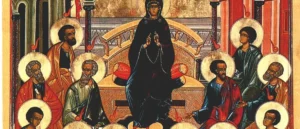
The Savior formally sanctified His Church at the feast of Pentecost, which is regarded as the birthday of the Church.
On that day, the Holy Spirit was sent to the disciples, and through the first preaching of the Apostles, about three thousand souls received the faith.¹¹⁷
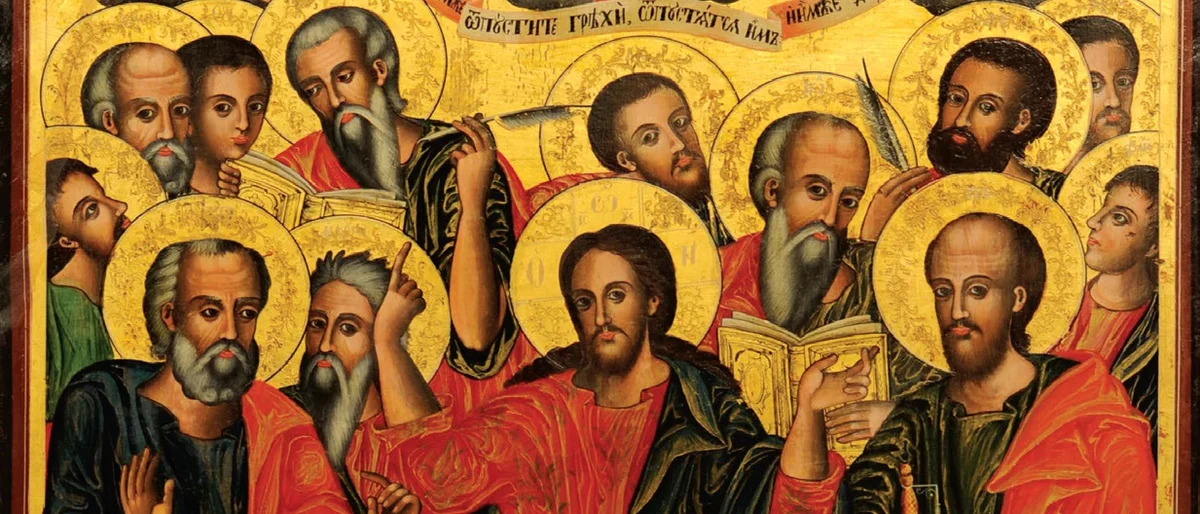
The Apostles then established local Churches in different places. Yet they understood themselves to be fellow workers with the Lord,¹¹⁸ because Christ Himself was the Founder and cornerstone of the Church.¹¹⁹
Naturally, the birth and earliest development of the Church were closely connected with the Jewish religious order from which she gradually separated, becoming an independent community distinct from the Jewish synagogue.
What Is the Primary Purpose of the Church?
The primary purpose of the Church is the salvation of humanity.
This is why Christ came into the world: to save the human person from sin and from eternal spiritual death.
The Lord accomplished the salvation of humanity through His threefold saving ministry:
His prophetic ministry, as the Teacher of divine truth;
His high-priestly ministry, as the supreme High Priest between God and humanity;
and His royal ministry, as the spiritual King of the world and of the Church.
Through this ministry He taught divine truth, sanctified the human person, and opened the entrance into the Kingdom of Heaven.
In the same way, the Church continues the work of her Lord.
She enlightens, sanctifies, and leads her members into the Kingdom of God.
For this purpose, the Lord gave His disciples His own authority and spiritual power, saying:
“He who hears you hears Me, and he who rejects you rejects Me.”¹²⁰
And again:
“Whatever you bind on earth will be bound in heaven, and whatever you loose on earth will be loosed in heaven.”¹²¹
Just as Christ is the Mediator between God and humanity and the only name “by which we must be saved,”¹²² so also the Church, which continues the saving work of the Lord, is the trustworthy teacher of truth, the bearer of divine grace, and the one sure ark of salvation.
The Church fulfills this mission by drawing upon the authority of her Head, Christ, who sent His Spirit to guide her “into all truth,” protecting her from the error that is inherent in the things of this world.
This has always been the Church’s understanding of herself throughout the course of her history.
The Holy Fathers unanimously express what Saint Irenaeus, Bishop of Lyons, stated so concisely:
“Where the Church is, there is the Spirit of God; and where the Spirit of God is, there is the Church and the grace of the Lord.”¹²³
And also:
Saint Cyprian likewise writes: “He cannot have God as Father who does not have the Church as Mother” (On the Unity of the Church, §6).
Source: Andreas Theodorou, Απαντήσεις σε ερωτήματα συμβολικά, Basic Dogmatic Teaching, vol. 5, 2nd edition (Athens: Apostoliki Diakonia, 2006), chapter VIII, “Ecclesiology,” questions 95–97, pp. 135–139. Reference numbers below follow the Greek source; Scripture-reference errors have been corrected. Comparative passages are presented as historical theological discussion, not as a description of every contemporary Christian community.
References in the Original Text
112. “Which is His Body.”
113. Isaiah 2:2; Daniel 2:44.
114. Matthew 3:2.
115. Matthew 16:18.
116. Acts 20:28.
117. Acts 2:41.
118. 1 Corinthians 4:1; 3:8.
119. Ephesians 2:20.
120. Luke 10:16.
121. Matthew 18:18.
122. Acts 4:12.
123. Saint Irenaeus, Against Heresies, III.24.