Entering the Orthodox Church · Lesson 8 of 20
Who Are the Servants in the Parable?
When the prodigal returns, the father turns to his servants: “Bring out the best robe and put it on him” [Luke 15:22]. Who are these servants who carry out the Father’s will? Since the house is the Church, the fathers answer, the servants are the clergy — those who receive God’s command to clothe the returning child in the garments of grace.
What Are the Clergy?
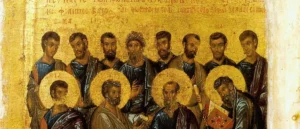
Christ chose twelve Apostles, sanctified and taught them, gave them the Holy Spirit, and sent them into the world to baptize and instruct. And He said something startling about them: “He who hears you hears Me, he who rejects you rejects Me” [Luke 10:16]. The Apostles, Metropolitan Hierotheos insists, are therefore not Christ’s representatives, the way an ambassador represents an absent ruler. They are the mystery of the tangible presence of Christ among us: when the Apostles forgive, God Himself forgives.
The clergy are bishops, presbyters, and deacons. The bishop is the visible head of the local Church, standing in the place and image of her true Head, Christ — we receive Christ in the person of the bishop. And the grace given to the Apostles is handed down by apostolic succession, like one candle lighting a second, and a third, until the light fills the world: through ordination, and through living the Orthodox Tradition, the blessing the Apostles received from Christ passes from generation to generation. A breach of that tradition creates heresy — which is why it matters whom a bishop commemorates in the Liturgy, for communion with the Orthodox Churches is the visible sign that he stands in the one Church.
The clergy lead the people of God as Moses led Israel — toward the Promised Land, which is Paradise. This is why the Church cannot accept the slogan, “I love the Church, but I want nothing to do with clergy.” Metropolitan Hierotheos stresses that sacramental life cannot be separated from the ministry of the clergy: it is the clergy who baptize us, chrismate us, nourish us with Holy Communion, hear our confessions, and crown us in marriage. Yet they do all this by God’s grace, not their own power — as the priest prays at the Liturgy, it is Christ Himself “who offers and is offered, who receives and is distributed.”
What Are the Church Militant and the Church Triumphant?
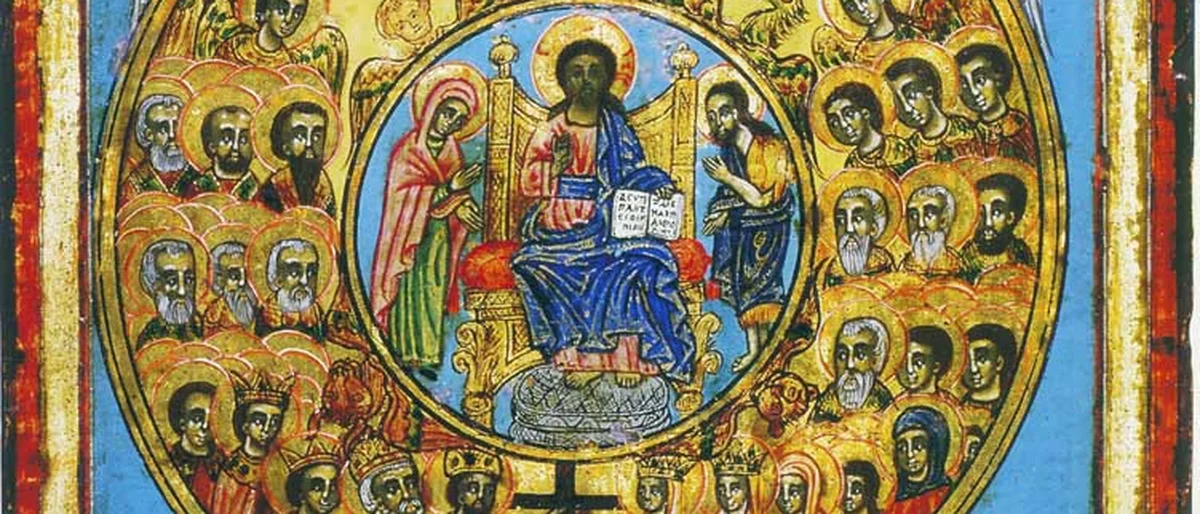
The Church is a communion of saints — an assembly of angels and men, of heaven and earth. Her members on earth, the baptized who keep the grace of their Baptism alight, are called the Church Militant, still fighting the good fight. Her members in heaven — the saints — are the Church Triumphant.
And here the Orthodox teaching is precise: saints are not simply good people. Saints are those who partake of the deifying energy of God. God creates the world by His creative energy and sustains it by His life-giving energy — but sustaining is not saving. Those are saved who partake of God’s deifying grace; and to partake of it, the heart must first be purified of the passions. Sanctity is not niceness; it is participation in God.
What Place Does the Theotokos Hold?
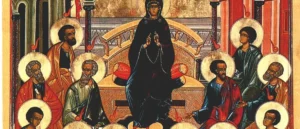
The central place among all the saints belongs to the Theotokos — the Birthgiver of God — who gave her own flesh to Christ. She is called Mother of God because the One she bore in the flesh, by the Holy Spirit, is the Second Person of the Holy Trinity: not a good man who later became a prophet, but the Word who was God before His conception and remained God after His birth. She is also Ever-Virgin: a virgin before, during, and after childbirth.
There is one Mediator between God and man — Christ [1 Timothy 2:5]; and the Virgin Mary is our intercessor with Christ. Metropolitan Hierotheos describes our love for her with a lovely symmetry: we love the Panagia either as the fruit of our love for Christ, or as a way toward love for Christ. Either way, she always leads to her Son.
Who Are the Saints — and Can We Still Become Like Them?
The Church Triumphant includes the prophets and righteous of the Old Testament, the Apostles, and the saints of every age: martyrs who witnessed with their blood; monastic saints who sought God in the desert; and married saints who kept God’s will in family life. There are saints from every social level, every age of life, every nation, and every era — and this fact demolishes our favorite excuse. No one can say that holiness was possible only long ago or somewhere else. Man’s deepest aim, in every generation, is to become a saint.
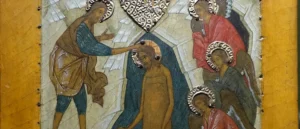
This is also why, at Baptism, each person receives the name of a saint — a patron whose life he comes to know and love, a heavenly friend and intercessor, and living proof that salvation is possible in every age. Our own parish bears such a name: the Holy Great-Martyr George, whose courage still teaches the community that gathers under his patronage.
This article is drawn from Entering the Orthodox Church by Metropolitan Hierotheos (Vlachos) of Nafpaktos, a guide to the catechism and baptism of adults, and is part of a series presenting its teaching.