Entering the Orthodox Church · Lesson 18 of 20
Why Does the Church Live by Sacraments?
The Church, in the old saying, “is declared in mysteries” — she shows what she is in her sacraments. Through them the Christian is united to the theanthropic Body of Christ and tastes divine grace. To confess “one baptism for the remission of sins” in the Creed is to confess that the Church is not an idea but a life — entered through a font.
What Does Baptism Do?
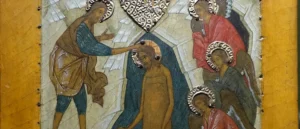
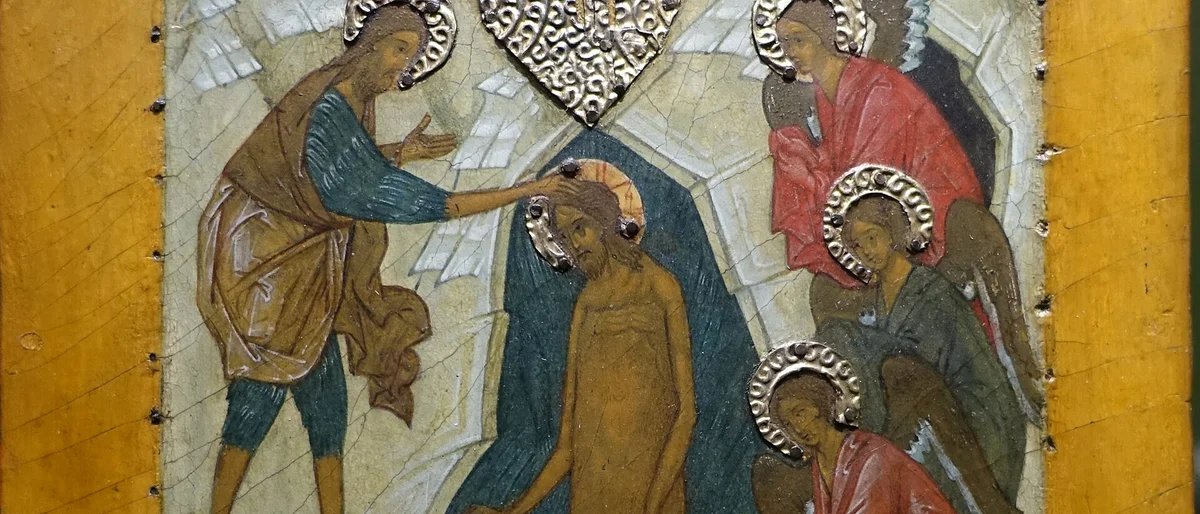
Holy Baptism is the introductory sacrament: it brings us into the Church and makes us members of the Body of Christ — it grafts us onto the new life. In the ancient Church it was always preceded by catechism, which prepared a person to become a real member, not a nominal one.
But the Lord’s commission had two verbs, and both matter: “make disciples of all nations, baptizing them… teaching them to observe all things that I have commanded you” [Matthew 28:19–20]. From this Metropolitan Hierotheos draws a rule every catechumen should memorize: sacraments without ascetic practice do not help, and ascetic practice without sacraments is not communion with Christ. Grace and struggle belong together — the sacrament plants, and the keeping of the commandments waters.
What Is the Baptism of Water and of the Spirit?
Christ told Nicodemus: “unless one is born of water and the Spirit, he cannot enter the kingdom of God” [John 3:5]. Saint Symeon the New Theologian interpreted this exactly: the baptism of water must be joined with the baptism of the Spirit — the coming of divine grace into the heart. The Acts of the Apostles shows the two together: the Samaritans had been baptized in the name of the Lord Jesus, but the Apostles Peter and John came and laid hands on them, “and they received the Holy Spirit” [Acts 8:14–17]. That apostolic laying on of hands lives on today as Holy Chrismation, which follows Baptism immediately and seals the newly baptized with the gift of the Holy Spirit.
What Does “Remission of Sins” Mean?
Not something merely legal — as though Baptism only cancelled a debt of guilt on a ledger. Metropolitan Hierotheos insists the remission of sins must be understood therapeutically: in Baptism the image of God in man is purified, the nous — the eye of the heart — is illumined, and the person returns to natural life. Sin, as the earlier lessons taught, is the darkening of the nous and the obscuring of the image; forgiveness is its healing and relighting. This is why the Church calls Baptism “Holy Illumination.”
And Baptism is one — unrepeatable — as the Creed says: one cannot be born twice from the same womb, and the font is the womb of the Church. Sins after Baptism are healed not by rebaptism but by repentance and confession, the therapy of the once-born.
Where Does Baptism Lead?
To the Chalice. Baptism’s aim is to lead a person into the communion of the Body and Blood of Christ — for the Divine Eucharist is the center of all the sacraments and of man’s whole ecclesial and spiritual life. No one can truly live without Holy Communion: “unless you eat the flesh of the Son of Man and drink His blood, you have no life in you” [John 6:53]. Yet participation is not automatic or casual; we approach according to the measure of our purification and illumination — which is why the Orthodox prepare for Communion with prayer, fasting, and confession, and why the priest calls out before the Chalice: “With the fear of God, with faith and love, draw near.”
The catechumen preparing for Baptism should see the whole path at once: the font, the chrism, and the Chalice — birth, breath, and food — one entrance into one life, which is Christ Himself.
This article is drawn from Entering the Orthodox Church by Metropolitan Hierotheos (Vlachos) of Nafpaktos, a guide to the catechism and baptism of adults, and is part of a series presenting its teaching.