The Holy Mysteries
Holy Orders
Cheirotonia: ordination by the laying on of a bishop’s hands, at the altar and within the Divine Liturgy, for the service of the Body of Christ.
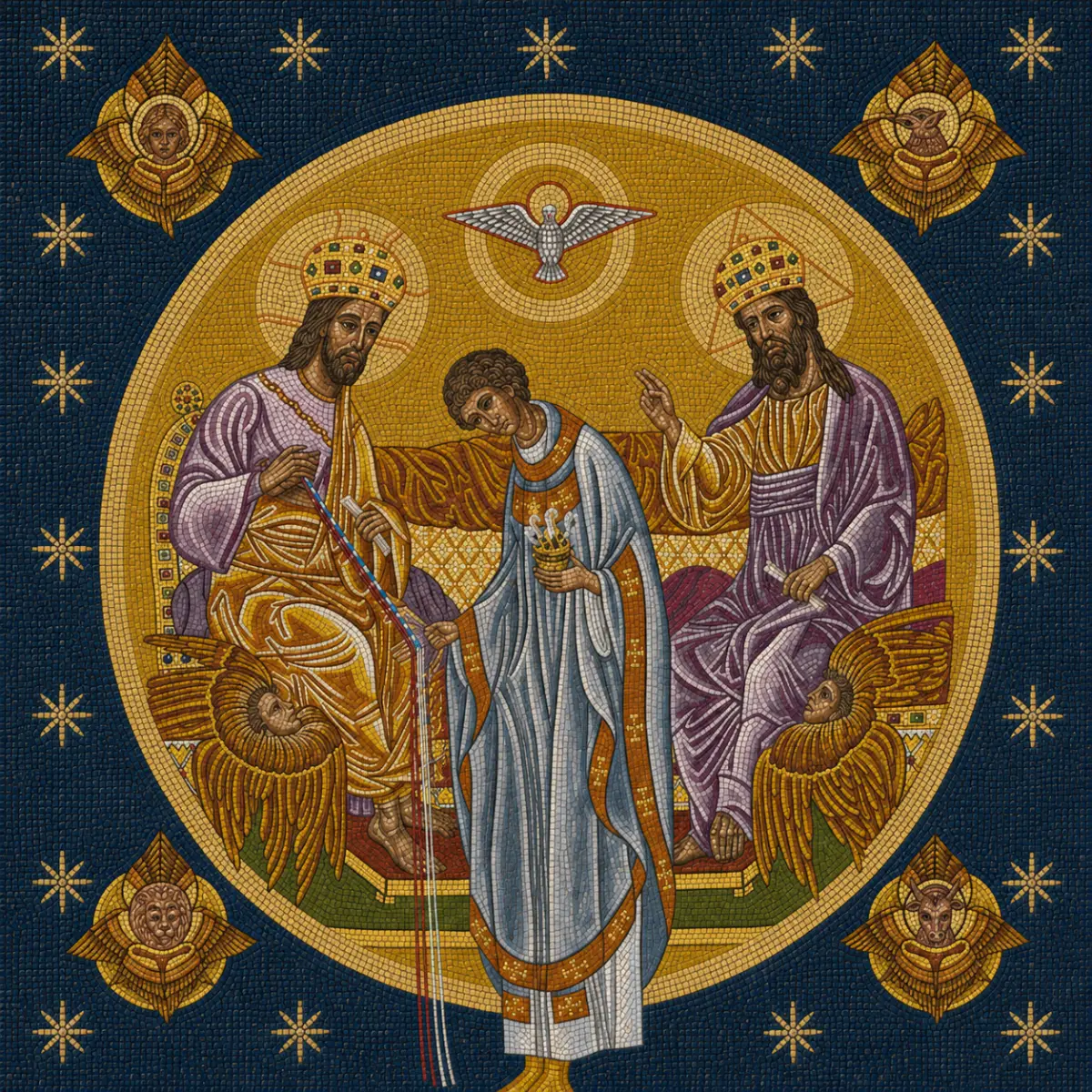
“A priest forever, after the order of Melchizedek.” — Psalm 109
Set apart for service
Holy Ordination sets apart bishops, priests, and deacons for service within the apostolic ministry of the Church. Through the laying on of hands and the invocation of the Holy Spirit, a man is entrusted with a particular ministry for the building up of Christ’s Body.
The bishop preserves the apostolic faith and the unity of the Church; the priest presides at the Eucharistic assembly and serves the pastoral and sacramental life of the people; the deacon assists the bishop and priest and embodies the Church’s ministry of service. Ordination is not the granting of personal religious authority, but a calling to represent the self-emptying ministry of Christ, the one true High Priest.
Practical guidance
Holy Orders in practice
The three orders
Bishop, presbyter, deacon
The bishop holds the fullness of the priesthood and is consecrated by two or three bishops. The presbyter celebrates the Mysteries in a community; the deacon serves the altar and the assembly.
Within the Liturgy
Each at its proper moment
A deacon is ordained after the consecration of the gifts, a presbyter before the anaphora, a bishop before the readings. The moment states what the order is for.
The people’s assent
Axios: he is worthy
The assembly acclaims the newly ordained. Readers and subdeacons are set apart by cheirothesia outside the altar. Ordination is service within the Body, not rank above it.
Considering a vocation
Anyone who believes he may be called to the diaconate or the priesthood should begin by speaking with the pastor, who will guide the conversation and, in due course, bring it to the bishop.