The Holy Mysteries
The Holy Eucharist
The center of the Church’s life and the end toward which the other Mysteries tend: the Body and Blood of Christ, given for the life of the world.
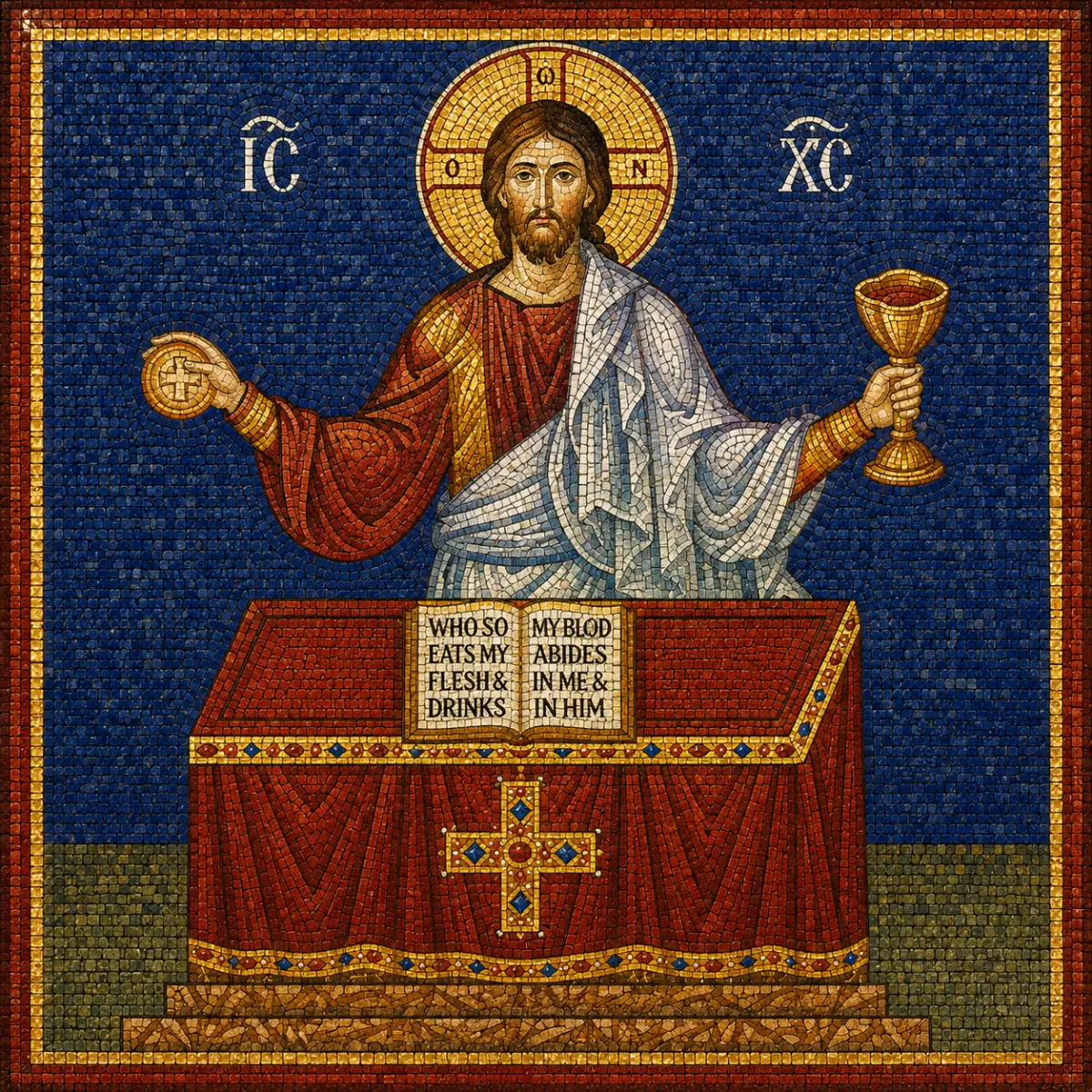
“Take, eat: this is My Body.” — Matthew 26:26
The heart of the Church’s life
The Holy Eucharist stands at the center of the Church’s life. In the Divine Liturgy, bread and wine are offered in thanksgiving and, through the invocation of the Holy Spirit, become the true Body and Blood of Jesus Christ. Holy Communion is not a mere reminder of the Last Supper. The risen Lord truly gives Himself to His people as food, healing, forgiveness, and eternal life.
The Eucharist completes Baptism and Chrismation and perfects the other Mysteries because it brings us into the most intimate possible communion with Christ. By receiving His Body and Blood with faith, repentance, and preparation, the faithful are renewed as members of His living Body, the Church.
Practical guidance
The Eucharist in practice
Preparation
Prayer, fasting, confession
The faithful prepare by prayer, by the customary fast from food and drink before Communion, and by a conscience made clear through the Mystery of Confession.
Who may commune
The baptized and chrismated
Holy Communion is given to Orthodox Christians who have been baptized and chrismated and who have prepared themselves. Others are warmly welcome at the Liturgy and may receive the blessed bread afterward.
The gifts
Leavened bread, wine and water
Bread from the prosphora offered by the people and wine mixed with water are brought to the altar, and the Holy Spirit is invoked upon them and upon the assembly.
Coming to the Chalice
If you are preparing to receive Holy Communion, or wish to understand what the Orthodox Church believes about the Eucharist, speak with the pastor.